




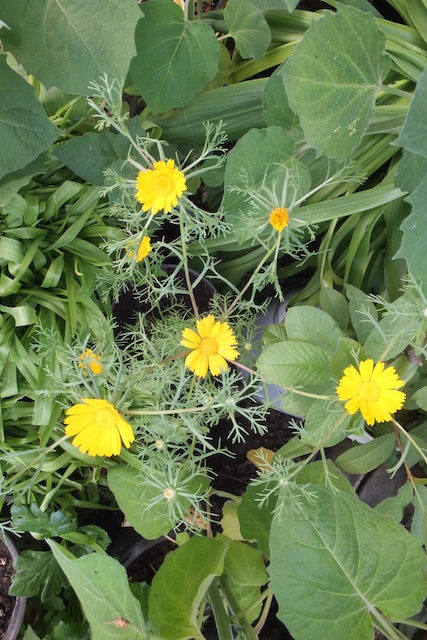
This delightful mound of feathery green foliage and cheerful golden yellow flowers will decorate your greenhouse or conservatory and has without doubt one of the most misleading names in geo-horticulture. Palm Springs is in Southern California and not so named until the middle of the 19th century. The infamous eponymous resort was not founded until the beginning of the 20th. Whereas this member of the daisy family known since Classical times originates from Southern Spain and North Africa and was introduced to UK greenhouses from the Barbary Coast at least a century earlier in the middle of the 18th. Cladanthusarabicus is also known as Golden Crown and Criss-Cross plant this latter being inaccurately descriptive.
For examine this plant carefully, a lax dome a foot or two across has distinct geometry. An annual this first starts to flower within the second month from sowing when a large bright butter yellow daisy appears at the end of each branch. Then three, four or even five new branches of bright green feathery foliage burst out from immediately under each flower each growing to flower and multiply again, and again. Thus in good growing conditions and good bright light it can form a near perfect dome to slowly cascade under its own weight.
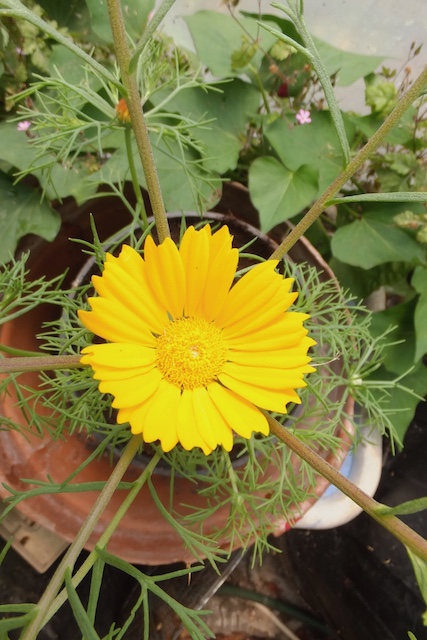
You cannot buy plants, only the seed is available and there’s but the one form sold (three other species are known but not in commerce) so this is also quite a unique plant. A plant with one of the very longest flowering seasons going on and on, and on truly a star performer. As a plus point both foliage and flowers carry pleasing aromatic perfume. Sadly not also edible, though to be fair looks as if it would be too chewy anyway.
Start the seed off in early spring individually in a multi-celled tray of sandy compost, well drained and not too rich. Move the seedlings up to a litre or so size pots in as few moves as possible and always keep in a warm sunny position. Water sparingly and feed occasionally. No pests or diseases have been observed (not surprising as it is a close relative of Tagetes marigolds).
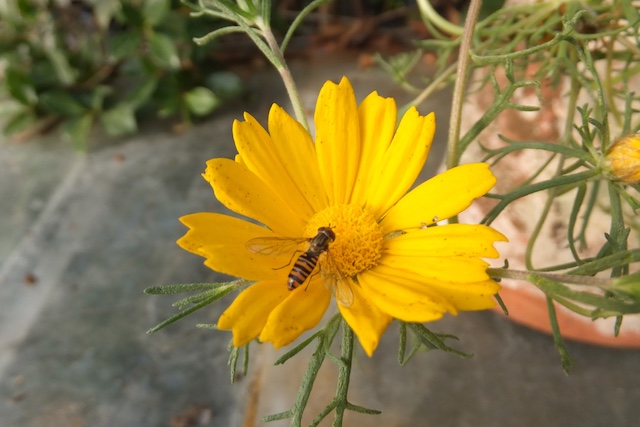
Oh yes, the odd Latin name comes from Greek Klados, a branch, and Anthos, a flower as at the end of each branch.