




Our gardens are full of all sorts of organisms, most in the plant and animal kingdom. But some have a kingdom of their own: the Fungi Kingdom. Jean Vernon explores this fascinating realm.
In autumn, our gardens come alive with fantastical growths in unexpected places. Fungi. What we see are the fruiting bodies of a much larger organism often growing beneath our feet. But not all fungi make toadstools as we know them, and those that do are often magnificent, surprising and sometimes quite magical.
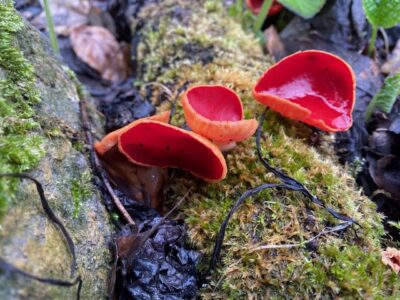
As a child, I associated fungi with the fairy realm. The virtual umbrella-like caps were shelter for magical creatures, or little stools for cheeky goblins and gnomes. I was fascinated by their shapes and colours but suitably warned not to touch or taste. These days I find it incredible that most know so little about these fascinating structures and yet happily buy cultivated forms by their million to create stroganoff, risotto and so much more. It’s time to put the fun back into fungi and welcome them into our gardens and soil by observing, watching and limiting how we cultivate the soil.
Safe to eat?
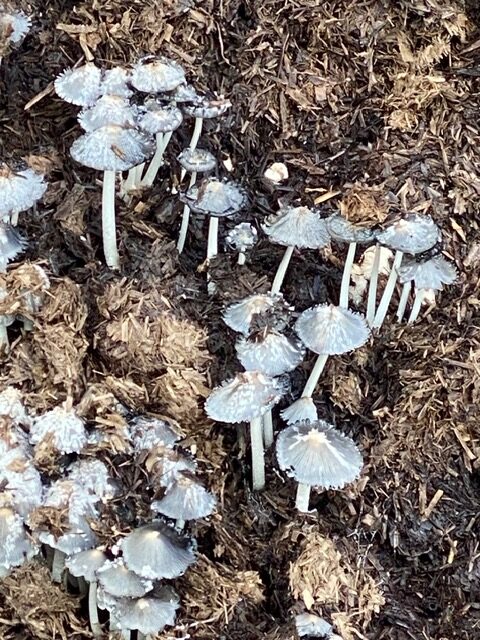
Many years ago I joined a mycologist for a fungi foray, desperate to understand which of these autumnal beauties were safe to eat. I came away realising that there was a small handful of fungi that are easier to reliably identify and eat safely and the rest were a serious risk. These days foraging forums are rife with images of fungi harvested with questions regarding whether they are edible. Sometimes I smile inside as everything is edible ONCE, what the question should be, are these toxic? Poisonous or lethal. Many of the most toxic compounds known come from nature.
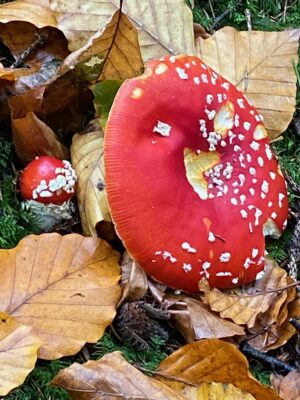
And as with plants, if you can’t identify something with absolute certainty it is not safe to eat. Not to mention the other dangers like maggots and decay. Over the centuries there have been some devastating instances of extreme poisoning by ‘mushrooms’, some resemble edible forms very closely and can be misidentified accidentally and sadly deliberately too. And then there are the hallucinogenic fungi, like the fly agaric, that fantastical red uniform, dotted with white spots. The ancient books describe the effects as a death like sleep. Many associate this fungus with Santa Claus and his flying reindeer, the legend thought to have been a dreamscape featuring the red and white and leaping reindeer that may or may not have eaten this iconic fungus.
Fairy rings
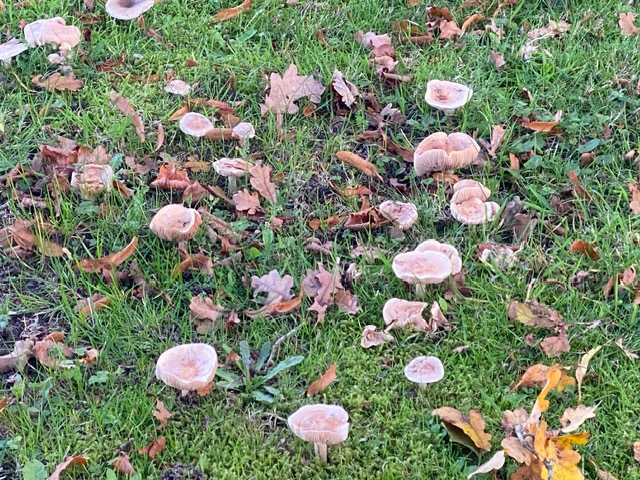
There’s a very deep connection between fungi mythical realms. As a child I was fascinated by the fairy rings on my grandmother’s vast lawn. I thought if I stood in the centre I might be transported away somewhere magical and yet I feared entering the circle. Did the fairies dance within under the moonlight? Or was it a portal to somewhere else?
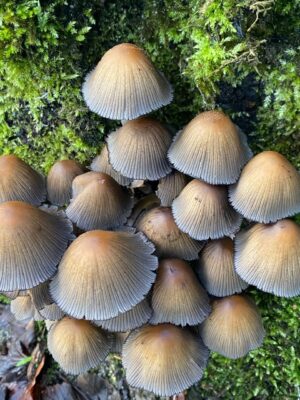
I still love to see circles of toadstools punctuating autumn lawns. Usually a sign of wood fibre beneath the soil still breaking down beneath the sward, the circular form a result of the way the mycelium grows from a central point. But actually it just shows there’s still glimmers of magic to surprise us. But it also hints at what is going on beneath our feet. For deep in the soil is the real world wide web. That of the fungi. And there the real magic begins. The magical interconnection between plants and fungi.
The real World Wide Web
We quickly accepted the concept of WWW to represent the reach of the internet and it already existed. In these days of focus on tech and connectivity and internet and growth we seem to have forgotten that nature was doing it anyway. Beneath our feet lies an intricately woven web of fungal mycelia that connects everything. It’s more than a means of communication, it’s access to a food bank of minerals and water, delivered to the roots of the plant via these fibres. Fancy that nature invented fibre long before we did. The relationships between fungi and plants is complex, but in essence the fungal mycelium grows deeper and wider than the plant roots, accessing the moisture, nutrients and minerals that the plants need and exchanging them for sugars and carbon that the fungi needs. Weirdly, this locks up mega tonnes of carbon underground, naturally. Another lesson from mother nature perhaps.
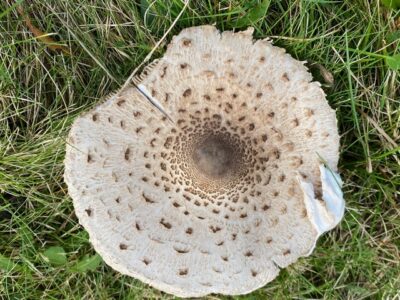
But even more fascinating are the stories of mature trees redirecting water and nutrients via these fungal threads, to their saplings to ensure their survival. And if a tree is under attack it emits chemical distress signals to neighbouring trees via the mycelium, who in turn manufacture protective compounds in their leaves to minimise damage.
In some strange way, plants can order what they need via the underground network to ensure they have the micro-nutrients that they need. So when we disturb the soil by digging, or worse, we actually interrupt the communication channels in ways we could never envisage. We have so much more to learn about these incredible marriages made in nature.
Sometimes it really is the little things, which really aren’t little when they join up in chains, that really make a difference.