



Are yellow flowers in the garden mellow or enough to make you bellow? Jean Vernon explores the yellow effect
We call it mellow yellow, but when it comes to flowers in the garden, yellow blooms are sometimes rejected and overlooked. But why? Yellow sometimes suggests sickness, possibly associated with bile and is also associated with fear. And then there is the term yellow-bellied, which was used to describe someone cowardly.
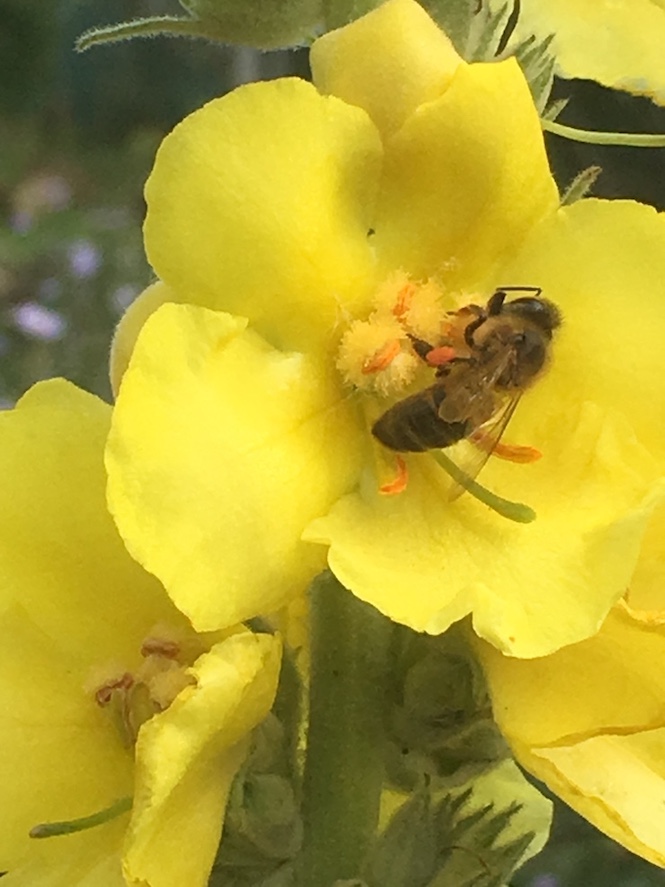
But in the spring garden we celebrate the first daffodils, the primroses and even the yellow dandelions. These bright cherry blooms herald the start of spring. In fact there are many more yellow flowers in spring as the bright petals attract emerging pollinators. Daffodils, dandelions, cowslips and celandines. These yellow petal-flags are a magnet for the pollinators who home in on the yellow flowers searching for pollen and nectar. And no wonder when you consider the dearth of flowers in late winter and early spring and indeed the low levels of pollinating insects too. Do the yellow flowers shine more brightly in the low sun, or are they virtual sign-posts to our pollinating pals.
What you might not realise is the yellow absorbs the warmth of the sun, providing floral radiators on sunny days where our cold-blooded critters can warm their souls.
Sunshine and flowers
There’s something very joyous about the sunny faces of yellow flowers, perhaps it’s because they resemble the sunny sun and maybe we associate that with summer and sunshine and joy. And yet yellow can also be associated with illness, possibly linked to the yellow skin effect of jaundice or liver issues with excess bile.
Many gardeners are too scared to use yellow in their gardens and choose pastel combinations without our sunshine hues. But married with red, or orange and indeed cool blue flowers, which contrast perfectly with the mellow yellows to create a pure and curated look, yellow flowers can be dramatic and dynamic.
Yellow Peril
It’s funny how yellow attracts insects. I always wondered why the early growing bags were yellow when gardeners often regard flying insects as pests. Yellow sticky traps are… yellow, attracting the fruit flies and white flies in our greenhouses. Dare to wear yellow outside and you can guarantee some winged visitors of the invertebrate kind will land on your golden garb. Insects themselves sport yellow and black livery to deter predators, their bright colours signalling their poisonous attack mode. And in bee world, it is the male bumblebees that sport yellow moustaches wooing their bride with their neatly groomed yellow facial hair.
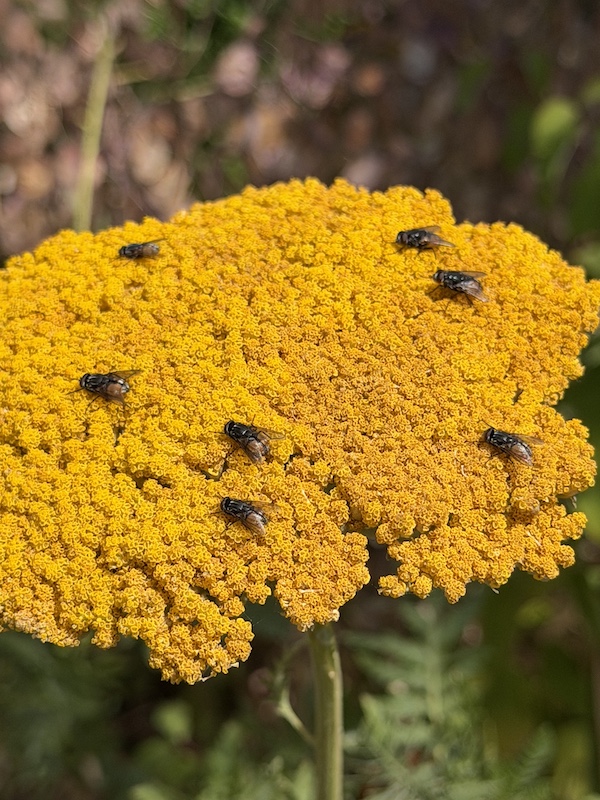
Flowers like the bright yellow yarrow attract short tongued pollinators like flies. Look out for these under-appreciated pollinators feeding on the flowers.
Springtime yellow
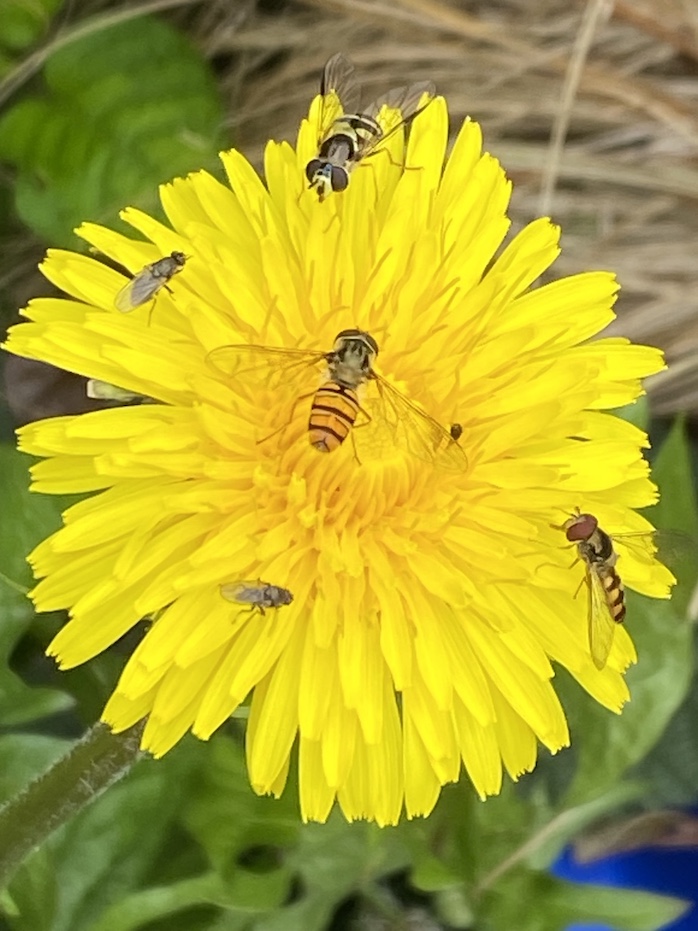
Look closely at the spring flowering plants and you start to see that yellow is quite predominant. Daffodils steal the show in borders, planters and parks. These striking, sunny flowers are a welcome sight after the dark, dismal winter. Inside the trumpet the temperature can be several degrees warmer than the temperature outside and any insects are sheltered from the wind. This encourages insects to linger inside the trumpet where they attract the pollen to their hairy bodies, taking it with them when they visit the next flower, effecting pollination.
But there are other powerful yellow blooms in spring. Not least the primroses, wild and cultivated that are rich in nectar and a virtual buffet for early emerging pollinators.
Possibly the most important yellow flower to bloom in your garden is the much maligned dandelion.
The dandelion is so misunderstood. The life-saving sunny faced flowers are virtual landing pads and dinner plates for pollinators. The tiny florets are rich in nectar and also contain pollen, though this is not the greatest quality. The pollen and nectar is accessible by a wide range of pollinators with different length tongues. The seeds are food for the finches. If you can leave dandelions to live and let live your garden will be a haven for pollinators.
Summer shades
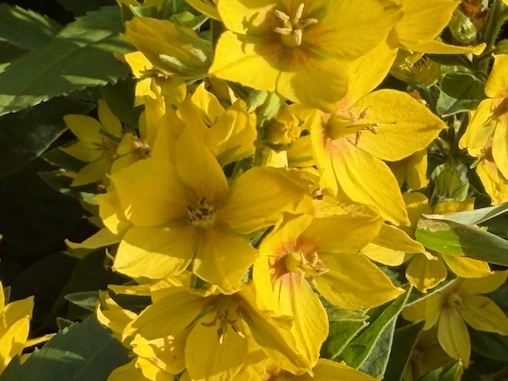
As spring slides into summer, yellow flowers are less prolific, but there are still many sunny-faced stalwarts like sunflowers, day lilies, hypericum, coreopsis and yellow loosestrife. Many are easy from seed like the yellow tagetes, zinnias, tithonia and antirrhinums, evening primrose and pot marigolds and rudbeckia. These summer sun-like flowers attract pollinators that feed on the nectar and collect the pollen. Plant a few pots with these sunny blooms, play with the colour effects by mixing yellow with red and blue and yellow, or even orange and yellow. It changes the feel of the planting and offers drama and zesty lemon coloured zing in the borders.
Autumnal hues
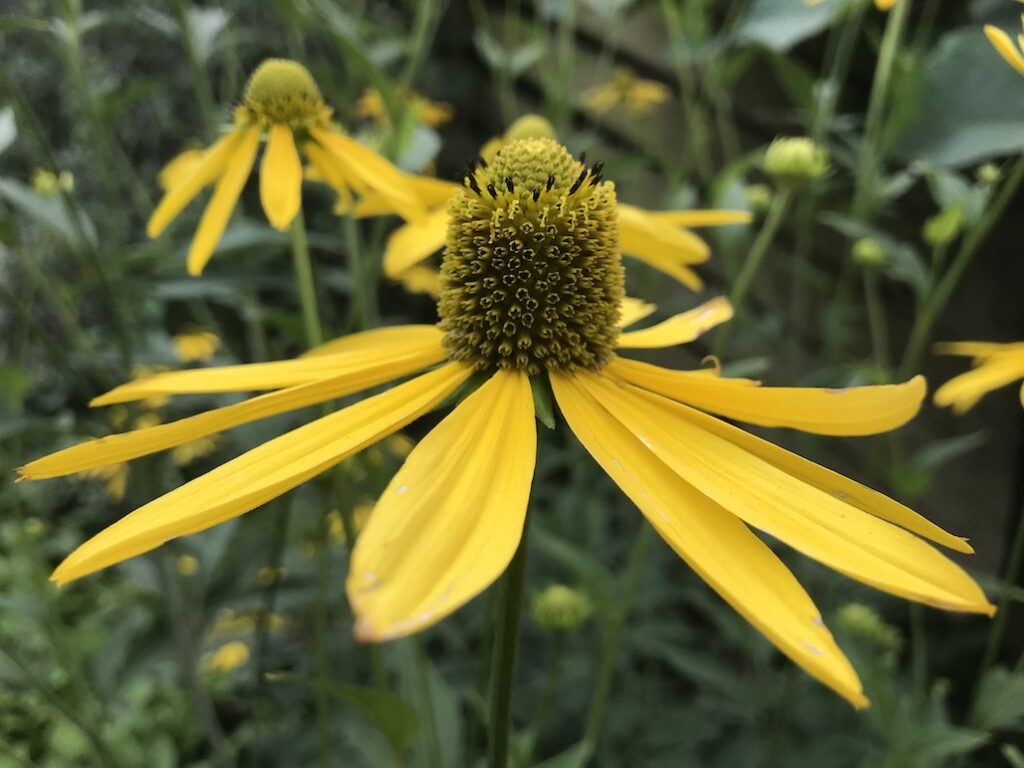
As summer slides into autumn the summer drama queens like the dahlias and rudbeckias and sunflowers may still be smiling with their sunny faces in the garden. But foliage also plays its part. Golden heucheras and the autumn leaves of the Japanese forest grass add golden hues to the border. But factor in the buttery yellow autumnal hues of trees and shrubs and a whole new palette of mellow yellow is available. For border effect the ginkgo tree turns from glorious green to butter yellow. A dwarf form is ideal for within the border.
Winter wonders
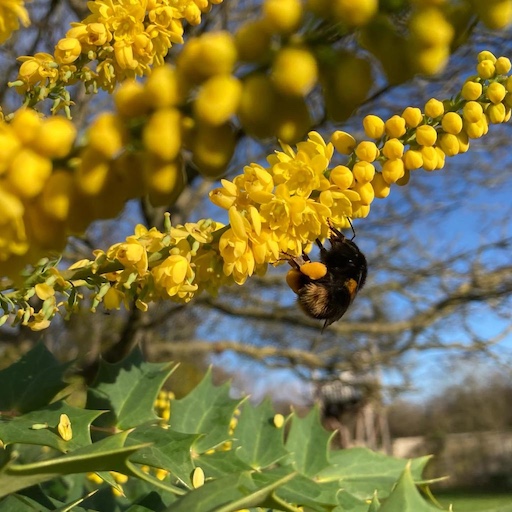
And if you thought winter yellow followed the traits of the winter sun, you’d be wrong. There are many yellow flowered winter stalwarts like mahonia and witch hazel, plus golden evergreen foliage on plants like eponymous, eleagnus, choisya sundance and even some hollies. Bright stems of cornus and golden willow and golden bamboo can all add striking yellow hues to the winter garden.
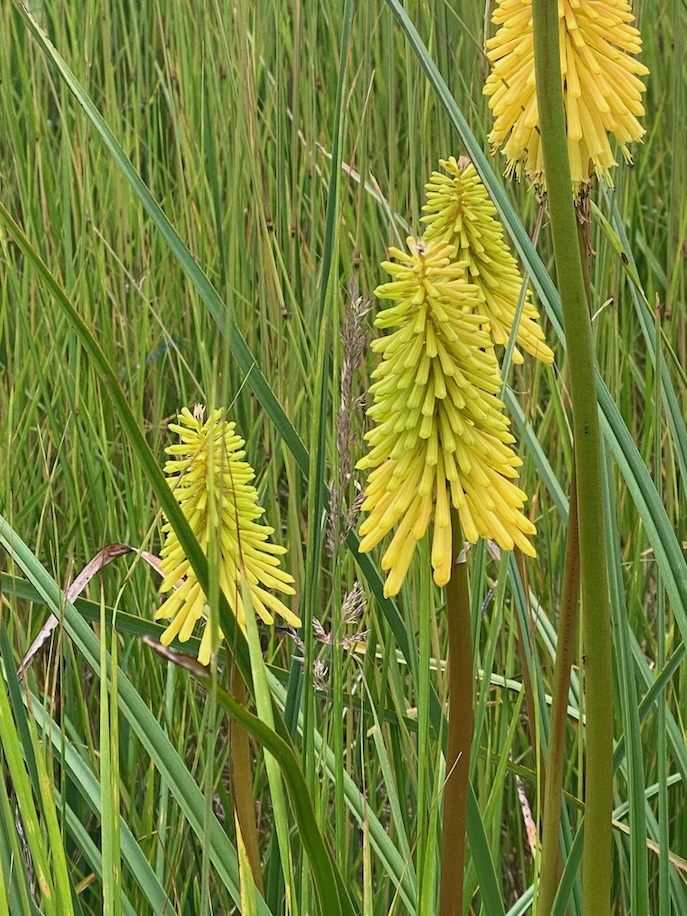
There are so many ways to embrace yellow hues in the garden. Choose gentle combinations where the yellows lift the effect. It doesn’t need to be brash or overkill, use the golden hues of yellow flowers to pick out other characteristics of neighbouring plants. This yellow kniphofia growing within long grass creates a simple, but powerful marriage. It doesn’t need to be complicated. Play around with the colours to create your own mellow yellow effect anywhere in the garden.