


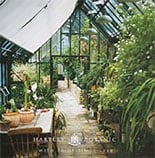

Winters in the southwest are at best variable to say the least. It may be the cold season, but weeks of warm, spring-like warm weather can’t fool us, we know it suddenly change overnight to unseemly arctic conditions. That’s the moment we gardeners swap the spade for a snow shovel, or possibly a broom since frozen precipitation can – at first – be like powdered sugar and melt just a quickly.
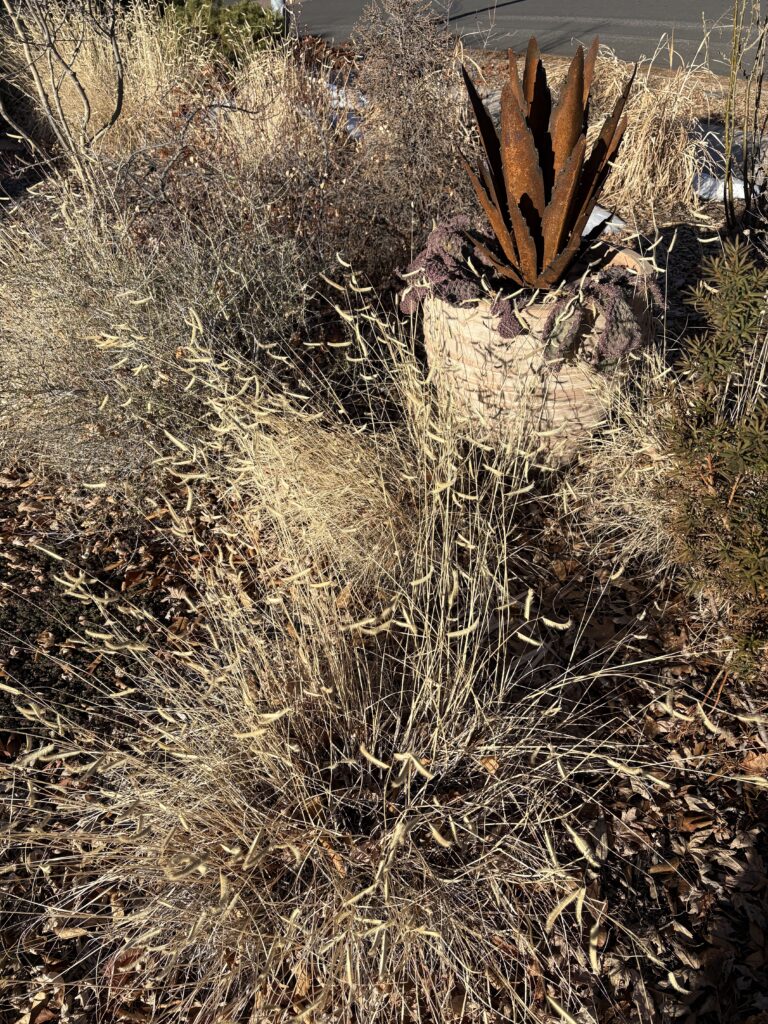
December was sunny and unseasonably warm, and there’s been little rain…or snow…making watering necessary. And now we must carry on to spring since we can’t rely on snow melt to irrigate the garden. Trees and shrubs especially need subsistence watering to keep them alive.
“We must keep in mind that one of the principal factors which makes gardening different in the Rocky Mountain area is lack of natural rainfall.” So wrote George Kelly in his 1957 guide, How to have Good Gardens in the Sunshine States. He continues by describing how soil, the contours of the land and the humus content affect the way we water: deep and at least three to four time a month. Humus, he stresses, is critical to enduring success in the garden as it encourages water retention, similarly mulch and cover crops impact how much water is retained in the soil, so add these to the winter garden toolbox. Good advice now, and good advice almost two hundred years earlier, with The Gardener’s Calendar of 1775 telling the same story. Author Phillip Miller, then curator the Chelsea Physic Garden in London, explains that if the month of January, “proves severely cold, and the ground is frozen so hard as not to be dug (as it often happens), you may carry dung and spread it upon the ground.” He also urges gardeners to get their tools cleaned up and ready for use, so that, “you may not be hindered with these things when every other part of the business is in great haste…” And I take “the business” to mean spring-cleaning the garden.
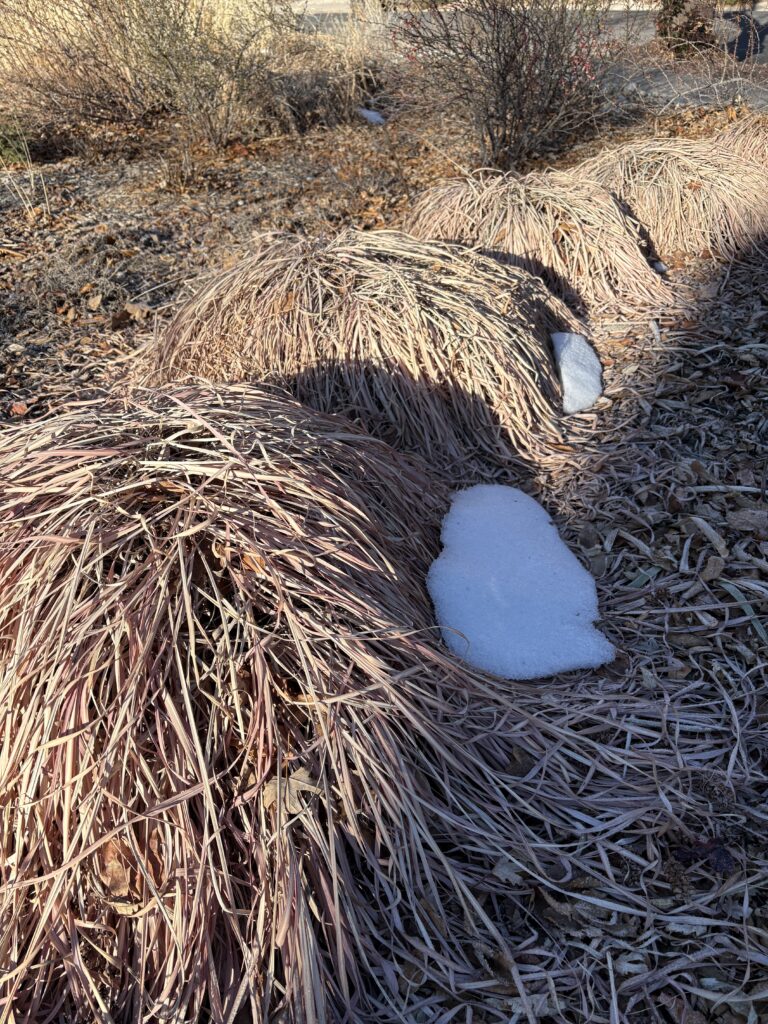
I’m reminded of that duty each time I step outside, as this past fall after a tumble on uneven pavements I was only able to put my feet up and apply ice compresses to damaged parts of my anatomy. It did give me time to think, to actually rethink my approach to garden maintenance: To learn to love the fading grasses, the fallen leaves, the evergreen groundcovers doing their wintertime work. We ought to recognize that this seasonal collapse is a good thing, providing shelter for pollinators, food for overwintering birds and as the decaying foliage and such melts slowly into the ground it improves the soil and water retention.
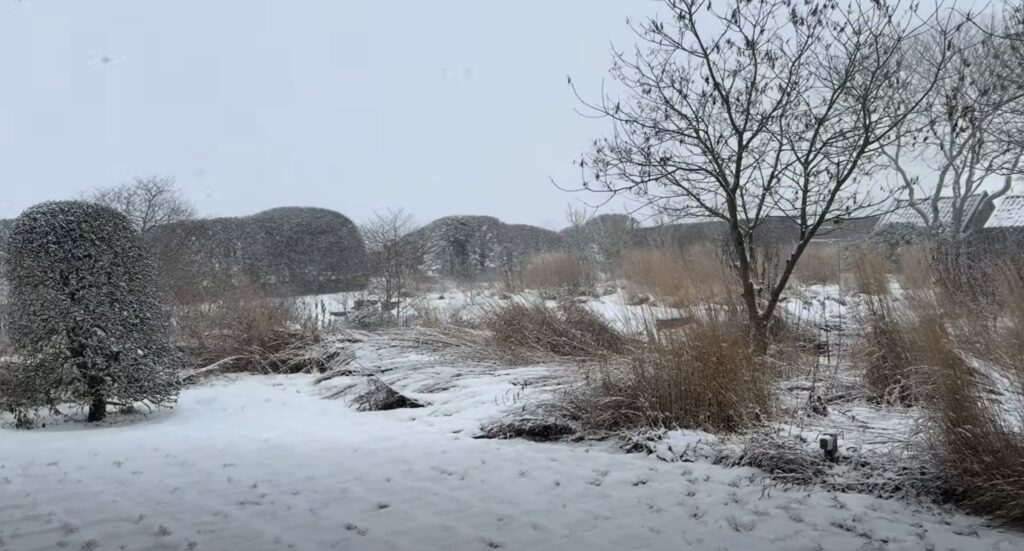
But it does take some getting used to, which I understood when Piet Oudolf, a renowned landscaper and plantsman, shared a picture of his garden in winter. Beneath bare tree branches, tufts of sturdy grass with stems still upright dotted the faded planting below. It caused me to look afresh at my garden and see the beauty in the deflated hummocks of big bluestem and the feathery remains of Bouteloua gracilis ‘Blonde Ambition’ drifting around the garden. Silver leaved shrubs, too, add a satisfying dusting of pewter grey as they fade. The clear up come spring will be busy, but I can take pleasure in the thought of how wonderful it will be to be waking up with the garden after our mutual winter hibernation.
©Ethne Clarke 2026
Piet Oudolf’s webpage is at https://oudolf.com/. Piet’s books are numerous and along the gardens he’s created around the world, a never-ending source of inspiration…for all seasons.