




“If the last month was so severe that little work could be done in the garden, there will be a necessity for forwarding business in this, provided the season be favorable.”
Thus wrote Phillip Miller, in his 1775 edition of the Gardener’s Kalendar, setting out the “work to be done” in every part of the garden, including the greenhouse. Advice that’s as valid now as it was 250+ years ago, as our weather has been severe and uncertain putting us behind schedule with gardening tasks. Parts of the country have been shrouded in roof-beam-deep snow, with more on the way. Yet, as I write this mid-February, when snow is typically falling reliably, the southwest is parched. The snowpack is the least it’s been for seven years, such that Pike’s Peak could be renamed Old Baldy as startling white crown is not what it should be.
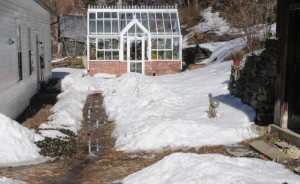
But as we’re gardeners, we are looking on the bright side — aren’t we? If you’ve been delayed cleaning up gardening tools and the potting bench, sorting pots and ordering seeds, we welcome this late start to the season as a reprieve when we can make up lost time.
In my neck of the Front Range, irrigation of trees is the first concern; dry conditions are tough on them and on shrubs. So, while taking care to complete any pruning and clipping back of these landscape anchors, we also make sure to water root area adequately; a depth of six inches is recommended. I like to lay an irrigation hose within the tree’s drip line, which will slowly emit water where it is most needed. Shrubs can be hand-watered with a hose.
Beyond that, it’s hard to get excited. When I look out at my garden I’m underwhelmed, “seized”, as one writer put it, “with profound melancholy…it seems impossible that such a “doleful demesne” will ever again look lush, filled with flowers, herbs, butterflies and bees. It is, in short, a mess. Out comes the broom vigorously applied to remains of autumn’s fallen leaves that we gather up and distribute as mulch in the vein hope that each year’s application will improve the prehistoric sand dune that is the base of our garden in the Rockies. However, a garden-wise friend who has been “feeding” her soil for decades actually has created decent soil. It’s never too late to start, so adding composted kitchen waste and bought-in humus may one day do the trick. I live in hope.
The nerve-center is the shed, where everything garden-related that is not planted and sundry ‘useful’ things are stashed over the winter. Sheds too easily turn into Fibber McGee’s closet and if you don’t know that classic comic routine from radio, there’s a link below to give you a laugh. Every family as one! So now is the time, if you haven’t done it already, to look for flat tires on wheelbarrows, sharpen secateurs, clean pots and toss out spent potting compost. My tomato plants last year were shadows of what they should have been because I was too penny-pinching to buy fresh potting mix to start my seedlings. They suffered from a nasty rot and wimpy foliage.
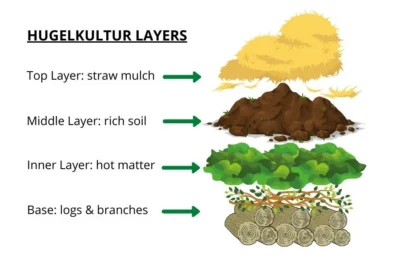 In the greenhouse and in the garden, planting beds and containers should be prepped ASAP, so they’ve a chance to settle. A friend who gardens in the twilight zone where the front range takes off from prairie has embraced the European practice of making raised beds from small logs, broken branches and twigs stacked to form elongated pyramids that are then packed with compost. This is a self-watering ecosystem known as hugelkultur. I’ve seen beds in Germany shaped like this, and into circular pyramids, supporting flower gardens, as well as herb gardens and vegetable. As the wood superstructure with the soil worked into the log ‘pile’ absorbs moisture efficiently, it provides well-aerated, cool, moist, open conditions for roots to dig in and take off. Which is just what we want with any project, right?
©Ethne Clarke, 2026
Tune in to Fibber and Molly McGee via this link:
https://en.wikipedia.org/wiki/Fibber_McGee_and_Molly
Hugulkultur explained in easy-to-follow steps:
https://atraditionallife.com/building-hugelkultar-garden-beds/