




The greenhouse in December is still, cold, and dark. It feels like a moment of deep pause. But it’s also precisely the moment when us gardeners – particularly those of us with greenhouses – can begin coaxing the first signs of spring to life.
We usually associate forcing bulbs with Christmas displays, but I am even keener on using the greenhouse for to create one of gardening’s most uplifting pleasures: early spring flowers that fill the air with scent and the eye with colour long before the outside world awakens. With a cold greenhouse and a little planning, December is an ideal time to pot up hyacinths, narcissi, crocuses, and other early bloomers for a fragrant February or early March show.
Why December Is Still a Perfect Time for Forcing Bulbs
Forced bulbs rely on tricking the plant into thinking winter has passed. Most spring-flowering bulbs require a 10–14 week cold period before they can begin to grow and flower indoors. Starting in December means you’ll miss a Christmas display, but you’re perfectly positioned for that magical window when winter feels interminable and the smallest hint of spring lifts the spirits.
Late-winter blooms have a charm all their own. Hyacinths bring their unmistakable perfume; miniature daffodils offer brightness on even the greyest day; crocuses glow like jewels; and muscari add delicate spires of blue. These early floral companions bridge the gap between winter and the true spring garden.
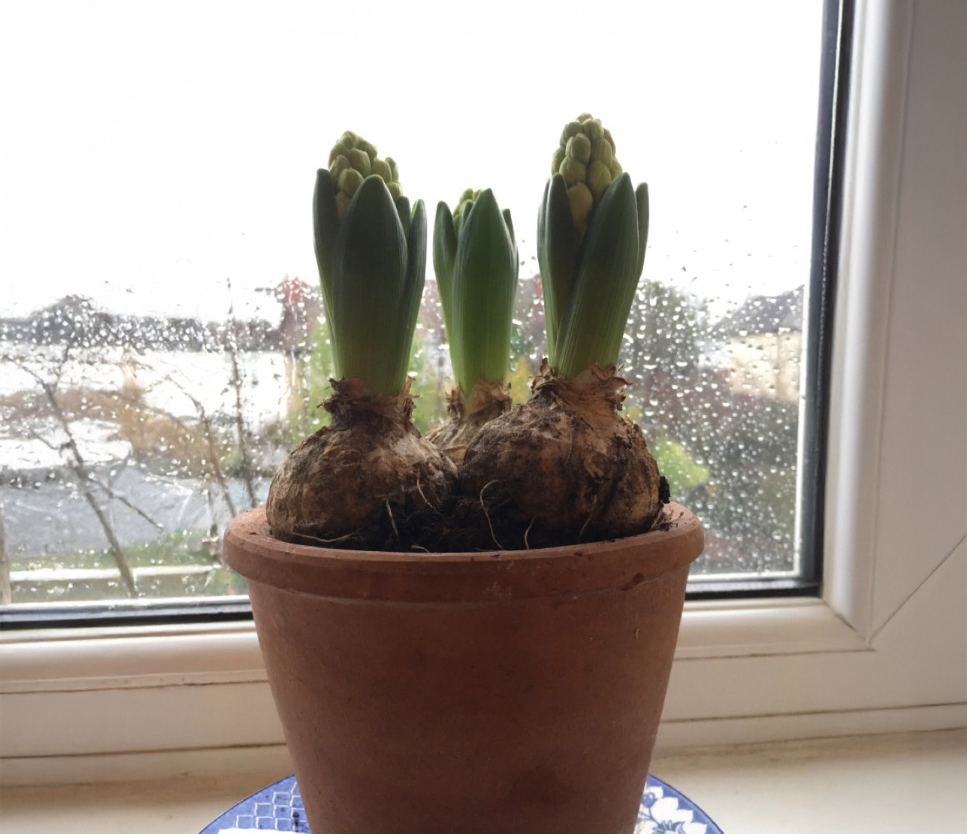
Choosing Bulbs for Cold-Greenhouse Forcing
When forcing bulbs in a cold greenhouse rather than a heated indoor space, choose varieties well suited to temperatures that hover close to outdoor levels:
- Hyacinths (especially prepared hyacinths): superb fragrance and strong upright colour.
- Narcissus ‘Paperwhite’ (though these prefer slightly warmer conditions, they can still start in the greenhouse before being brought indoors).
- Narcissus ‘Tête-à-Tête’ and other dwarf varieties.
- Crocus tommasinianus and other early crocuses.
- Muscari armeniacum (grape hyacinth).
- Iris reticulata, petite and intensely coloured.
Prepared hyacinths and narcissi are the easiest, as they have been pre-chilled and respond readily even to late-start forcing.
How to Plant and Grow in a Cold Greenhouse
- Choose the Right Containers
Shallow bulb bowls, terracotta pots, or recycled containers with drainage holes all work well. Bulbs don’t need deep soil, just enough to anchor their roots. - Use a Free-Draining Compost Mix
A 50/50 blend of multipurpose compost and horticultural grit or perlite keeps the soil light, preventing rot in cold, damp conditions. - Plant Bulbs Close Together
Nestle the bulbs shoulder-to-shoulder, but not touching. For hyacinths, the tops can peek above the compost surface; narcissi and crocuses prefer to be buried a little deeper. - Moisten Gently
Water lightly after planting. Too much water in cold conditions invites mould. Thereafter, keep the compost just barely moist. - Provide the Cold Period
Even in December, your greenhouse should offer sufficiently cool conditions. Temperatures between 0–10°C are ideal. Keep pots shaded or covered with black plastic trays for the first 6–8 weeks to simulate darkness. - Bring to the Light
When shoots are about 5 cm tall, move pots to brighter positions within the greenhouse. As days lengthen, they’ll respond quickly, sending up buds that fatten and colour. - Finish Indoors (Optional)
If particularly cold weather threatens, or if you want to enjoy the blooms at close quarters, bring the pots into the house once buds are well formed.
The Joy of Late-Winter Bloom
There is something quietly triumphant about flowering bulbs in February. While the garden sleeps, your greenhouse offers not just flowers but a promise. The scent of hyacinths drifting through cool air, the golden nod of early narcissi, and the soft blues of muscari together create a tiny, personal spring.
Starting in December means you’ll be rewarded just when you need it most: that moment winter begins to feel just too long, and the first touch of spring fragrance reminds you that new growth and a new season is on its way.