


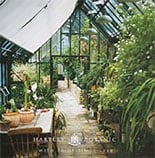

After such a wet start to the season here in the UK you might wonder why my focus this month is on water.
c. Jean Vernon
It’s a reminder about this precious resource. Sadly it doesn’t seem to be revered. In living memory, the human race has poisoned, polluted and disregarded the water of the planet. Even in our gardens, after weeks and weeks of torrential rain, it can be difficult to remember or maybe appreciate that rain is a blessing. We can harness and store the rainwater in our gardens to water our plants in summer and provide a source of water for wildlife. Puddles and waterlogged soil will soon dry out and then we will be glad of the rainwater we saved for a non-rainy day.
We have a history of neglecting the planet’s water, fertiliser run-off from the land pollutes the waterways and powers the growth of algae and water plants, clogging the rivers and streams and stealing the oxygen from the creatures that live there. Our sewage is regularly pumped into rivers and into the sea, while our waste plastic is eaten by sea creatures, piles up on beaches and forms massive, swirling accumulations of garbage in the world’s oceans. And yet water is essential to life and without it, we couldn’t survive. A drop in the ocean might be harmless, but what we are dumping into the rivers, seas and oceans are not little drops. It’s time we respected water and we can start in our gardens, however big or small.
Moisture and morning dew
c. Jean Vernon
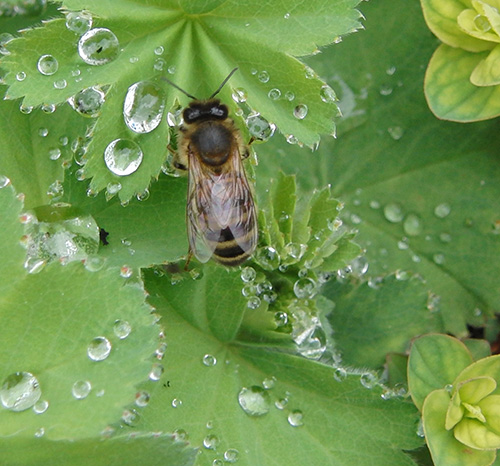
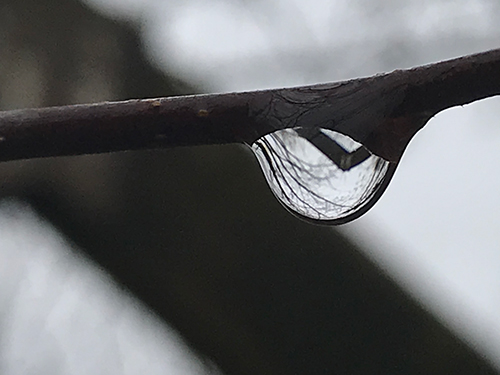
Have you ever noticed the droplets of water on the leaves of lady’s mantle (Alchemilla mollis)? Water accumulates on the fuzzy leaves, providing drinking spots for insects and garden wildlife. The morning dew accumulates on the grass underfoot and adds moisture to the surface of the soil. Stop and look, it’s a beautiful sight. After rain look for water droplets on the flowers, on the moss and on the trees; each one is a tiny little mirror in the garden, capturing small snapshots of garden life. As the water falls to the ground it is absorbed by the soil and held there until it is taken up by the plant roots.
Puddles and mud
After weeks of rain, it’s inevitable that we have muddy puddles in and around the garden. Embrace them, for these are the building bricks for many creatures. House martins and swallows use mud to make their nests, creating little adobe structures for their chicks, while blackbirds bind grass and twigs with mud to make their nest and our garden thrushes line the inside of the nest with a layer of mud to create a strong saucer effect for their chicks. Our mason bees (Osmia spp) use mud to make little bedrooms inside a cavity for their nest, these bees are brilliant pollinators for apple and pear trees. Some solitary wasps also harvest mud for their nest including the incredible potter wasp, which makes tiny mud urns for its babies. Leave a waterbutt tap dripping to create a muddy puddle in the garden to provide this essential building material for wildlife.
Water bath for birds
c. Jean Vernon
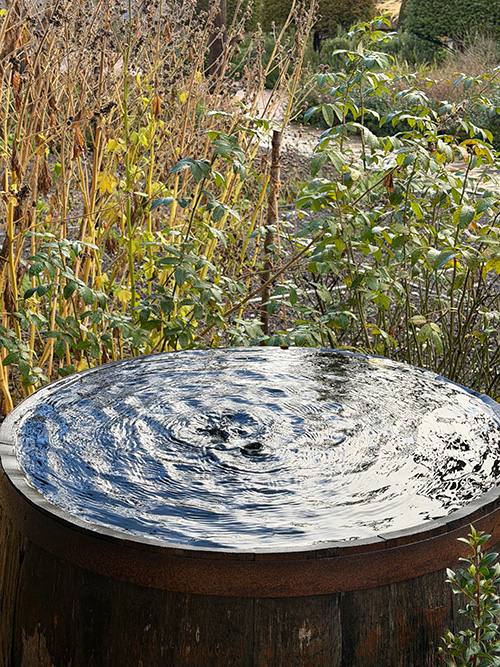
A bird bath is a magnet for our garden birds, to drink and to bathe. It can be a simple shallow container topped up with fresh clean water, or a more elaborate affair. A bowl at ground level provides essential water for wildlife. Make sure it is always full of water, especially in icy cold weather and during a drought. Remember it’s not just birds that will visit a water bath, so make sure there are islands and a ladder out or a shallow edge for creatures to come and go.
Make a drinking station for wildlife
c. Jean Vernon
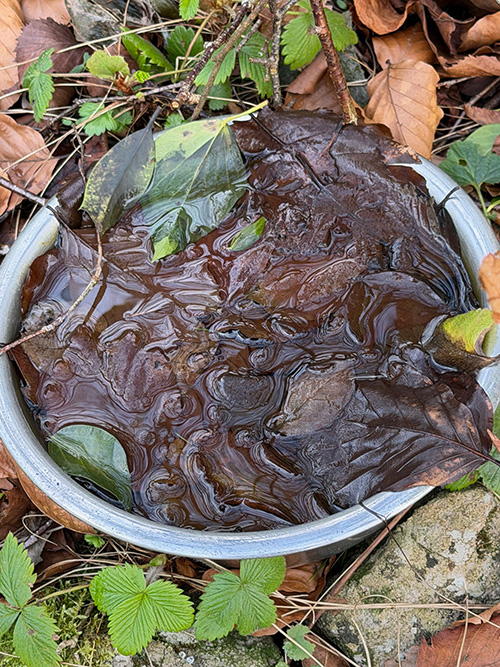
Always have a bowl or two of water in the borders, this provides additional water for wildlife that visits your garden. Install a ladder or place a large stone in the centre for wildlife to exit safely.
If your bowl fills with leaves and organic material, you’ve inadvertently created a hoverfly lagoon. Some of our precious pollinating hoverflies lay their eggs in aquatic conditions and the larvae hatch out and feed on rotting vegetation. So, leave your stinky bowl of debris, keep it wet and let the hoverflies finish their lifecycle.
c. Martin Mulchinock
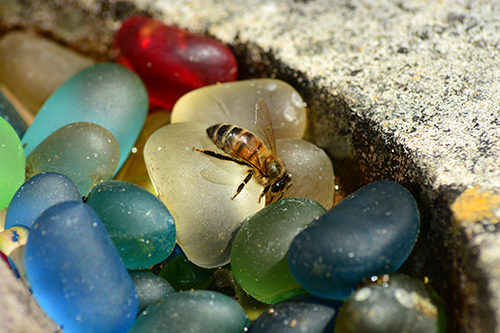
We sometimes forget that insects need water too. A bee-drinker is a lovely addition to any garden, large or small. Fill a shallow bowl with rain water and add some marbles, smooth pebbles or glass beads; these will be little islands in the water for an insect to rest, reach the water and exit safely. You may be surprised to see which creatures use your drinker. Keep it clean and full of water.
An alternative idea is to keep a patch of moss wet somewhere in a quiet spot in the garden. Smaller creatures can take the moisture from the moss safely.
Build a Pond
c. Jean Vernon
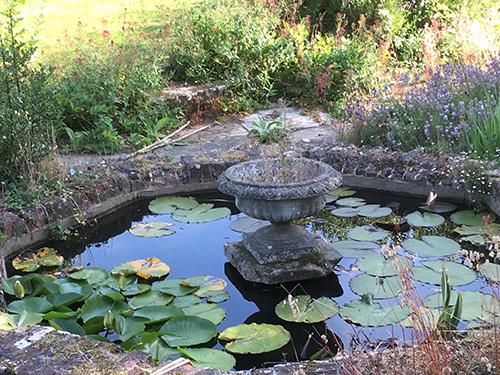
If your garden is big enough and you don’t have visiting children, consider adding a pond. But beware that water is a magnet for toddlers and young children, so be sure to prevent access to the pond and keep them safe.
A pond will attract a huge variety of garden wildlife and become a nesting environment for frogs, toads and newts, which in turn will provide free pest control in your garden. Plus, it’s fascinating to watch the tadpoles transform into little frogs and toads. A pond also gives you the chance to grow bog plants and water plants so you can expand the range of plants you grow in your garden.
Soil moisture
The secret to a healthy garden lies in the soil. Poor soil structure can create all sorts of problems. A soil rich in organic matter is alive with mini-beasts and micro-organisms and well aerated which improves the drainage. By feeding the soil with home-made garden compost and composted leaf-mould you increase its moisture holding capacity. This keeps moisture near the plant roots so that it can be taken up into the plant. It also reduces the need to continually water the soil. Plus, if you mulch over the surface of the soil while the soil is wet in February and March, you can slow water evaporation at the soil surface and keep the soil moist for longer. As the organic matter breaks down it releases nutrients and helps feed the plants too.