



Check greenhouse seedlings daily. They should only be watered if necessary and ensure they are not overwatered. They need watering less often when light and temperature levels are low. Use tepid tap water.
Continue to inspect plants daily; look out for the three main greenhouse pests – aphids, whitefly and red spider mite – on shoot tips and the underside of leaves. Use organic spays for aphids and whitefly and increase the humidity around plants by misting with soft tepid water to discourage red spider mite which dislike dry air. Planting French marigolds in the greenhouse will discourages whitefly but only when they are in active growth.
Continue to prick out and pot on seedlings before they become ‘pot bound’, gradually increasing the pot by one or two sizes until they reach the final ‘maturity’ pot.
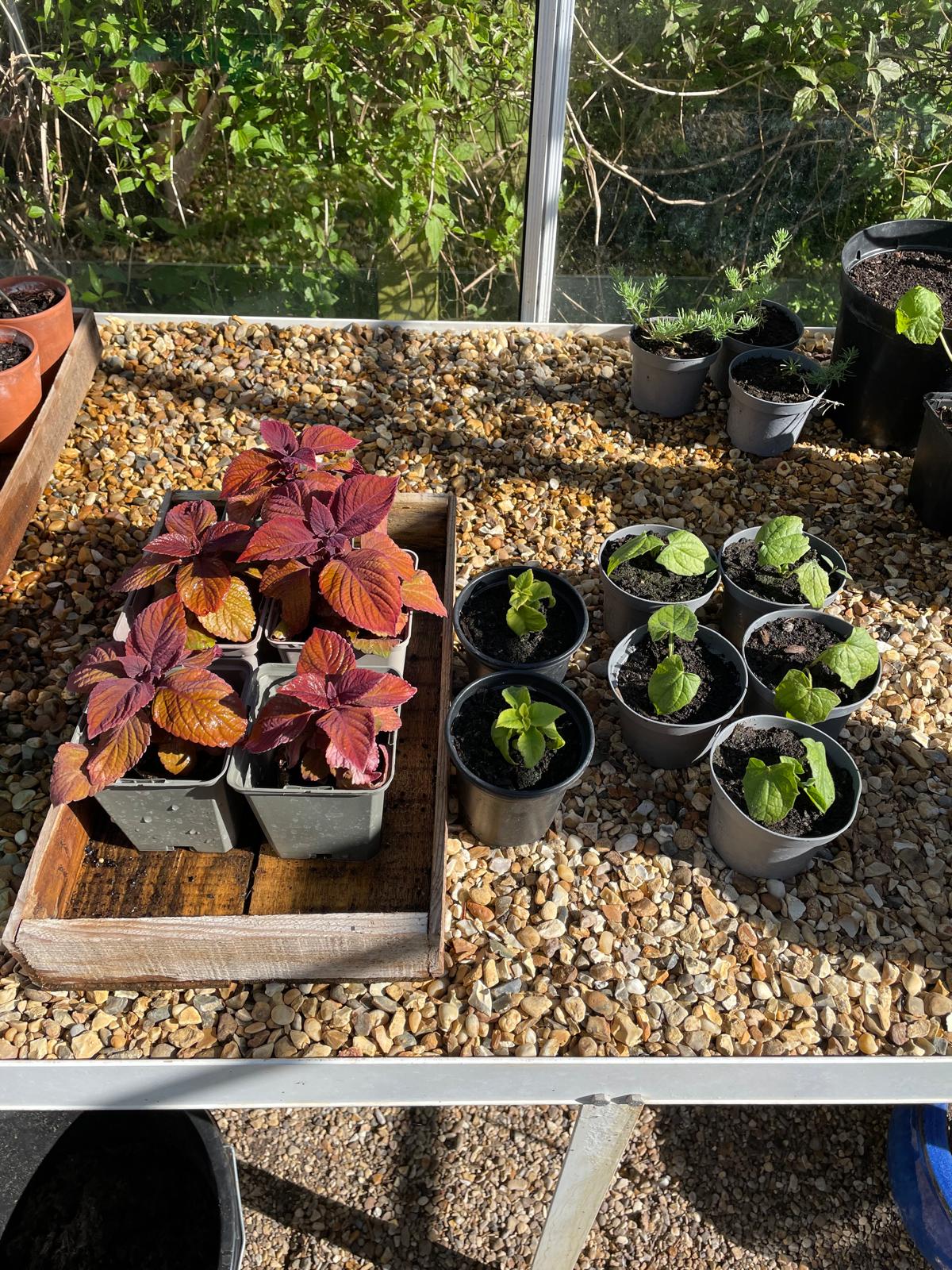
It is important to ‘harden off’ or ‘acclimatise’ greenhouse grown plants to outdoor conditions before planting them out. If you move them straight from the greenhouse to the garden, they generally suffer from shock, particularly in cooler weather. Most recover but it checks the growth, causes yellowing and some vegetables may ‘bolt’ or run to seed. Hardening off takes two to three weeks depending on the plant, the greenhouse temperature and location of the garden. Hardy plants acclimatise more rapidly than half-hardy or tender plants.
It is also a good time to plant up hanging baskets so they have a few weeks to establish. Always buy your bedding plants from a reputable supplier – plants may cost more but the choice is generally greater. If they are a popular retailer, plants do not spend too long on the benches and deteriorate. They should be compact, pest and disease free with undamaged green leaves, and without masses of roots growing through the drainage holes. The compost should also be moist.
Now is the time to sow outdoor cucumbers like ‘Marketmore’, marrows, squashes, pumpkins (vertically on edge, not laid flat like a surf board). Sow individually in 7.5cm pots plus French and Runner beans and Sweetcorn, in gentle heat, in peat substitute seed compost or sieved multipurpose compost in a propagator, ready for planting out once the danger of frost has passed. If the weather is still changeable, keep sowing salads for transplanting.
Ventilate the greenhouse daily before temperatures get too high and provide shading from blinds on sunny days. Water using warmed rainwater on anything but seedlings (use tap water instead) and ‘grey water’ on ornamental plants.
Tie in the main stems of tomatoes, peppers and aubergines onto supporting canes as they grow using soft twists, twine or raffia. Be careful not to tie them too tightly and check regularly so they don’t cut into the growing stems.
Dampen the floor of the greenhouse regularly on hot days.
Check and control pests and diseases daily – look out for slugs and snails under pots, they have a knack of ‘getting in’!
Happy gardening.
Matt.